

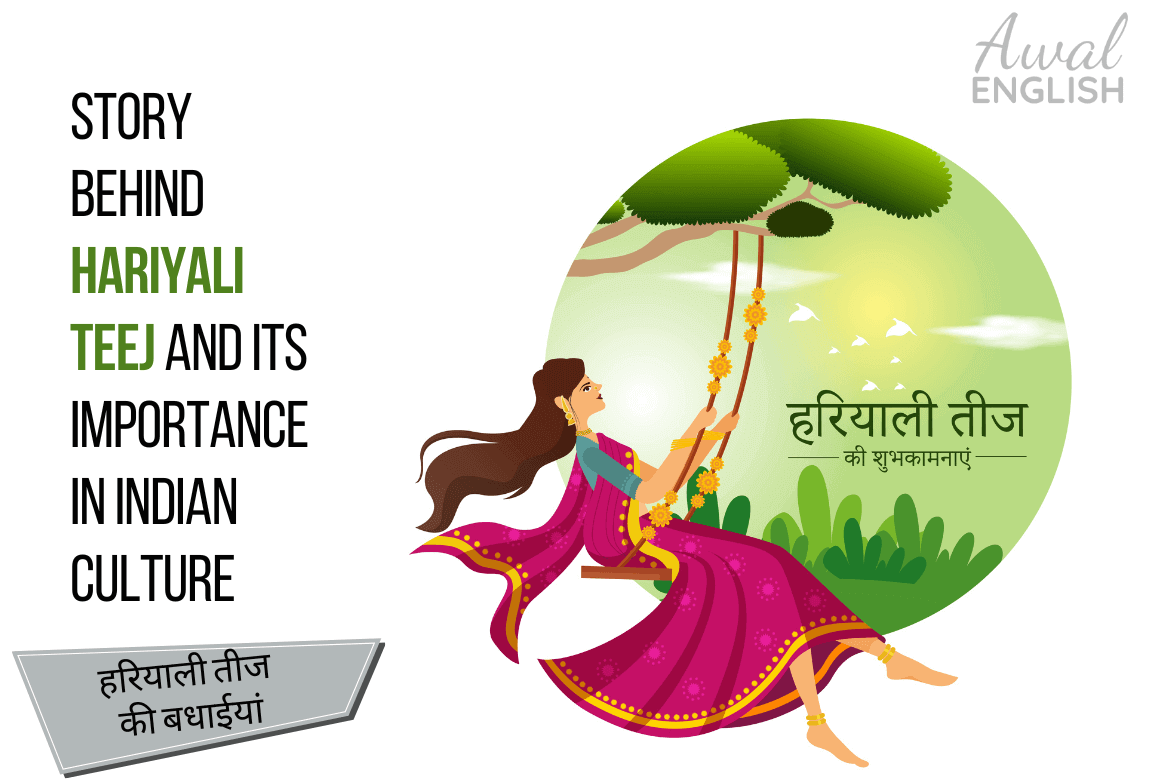
Have you ever thought of a day where joy, devotion and lush greenness of the monsoon combine together and create a different magic? If your answer is no, then you must have forgotten the magic of Hariyali teej- a festival where devotion, joy and monsoon creates an unsaid magic of its own. Every year, women across different states of India wait for Hariyali teej to get dressed up in green attires signifying the lushness of monsoon and apply mehendi. But Hariyali teej is not just about all these things, but it is about a powerful story of love, perseverance, traditions, etc., that have woven the Indian culture in a thread of positivity, festivity, trust and love.

In this blog, we will understand the story and significance of the Hariyali teej where you will find the reason behind why Hariyali teej is celebrated and also build an understanding of learning English through this story.
About Hariyali Teej
Hariyali teej is celebrated with great zeal and enthusiasm in the northern part of India. The name Hariyali signifies greenery which perfectly fits into the lush, rain-soaked time of the celebrations. Hariyali teej falls on the third day after the new moon of the Shravana month of the Hindu calendar. This festival celebrates the devotion, nature, belief in the most pious relation between husband and wife and togetherness of the women.
This festival is primarily celebrated in the north Indian states like Bihar, Rajasthan, Haryana, Uttar Pradesh, and Punjab. The most unique aspect of this festival is that the women from all age groups come together to celebrate the richness of this monsoon festival, with jhulas dangle from tree branches, traditional folk songs vibing with the cold air of monsoon, and the air filled with the aromas of ghevar and the festive vibe of dance and songs.
Story Behind Hariyali Teej
There is an incredibly relevant story of Lord Shiva and Goddess Parvati that forms the heart of the Hariyali Teej festival. The Hindu mythology says that Parvati was deeply in love with Lord Shiva and to win him, she performed intense penance and devoted her 108 lifetimes to win him over. Lord Shiva who was unable to move on from the loss of Goddess Sati finally bowed down to the penance of Goddess Parvati and accepted her.
On this special day it is believed that Parvati’s unwavering devotion won and Lord Shiva surrendered to her and accepted her as his consort. This story resonates strongly with the Indian values and culture of perseverance, love, and the sanctity of marriage. So women fasting on this day is not just a ritual but they are believing and reliving the story of Goddess Parvati’s love and devotion.
Significance of Hariyali Teej in Indian Culture
The significant feature of Hariyali teej that makes it stand out from others is the deep message it carries. This festival is not just about sweets, jhulas, or folk songs, etc., but it is about the celebration of marital happiness, prosperity, devotion, faith and love of women, and the fresh and lush green start of the monsoon over Northern India.
The different elements of Hariyali teej carries different symbolism and meanings. The jhulas or swings are highly celebrated during Hariyali teej because they signify the marital ups and downs a couple go throughout their life and how they stick to their relations. Green colour is the symbol of fresh and new start, prosperity, fertility and hope. On Hariyali teej, women wear green sarees, green bangles, and apply mehendi not for just photos but in the belief of fresh start, prosperity and fertility in their lives.
Hariyali teej has different meanings for different age group women, as for married women, this day is to wish for their husbands’ long life, a happy and prosperous married life. Unmarried women also observe this fast to ask for being blessed with a loving and supportive partner. For families and societies, this festival is about celebrating the essence of togetherness and community building.
Why is Hariyali Teej Celebrated in Monsoon?
Hariyali Teej falls on the third day after the full moon of the Shravana or Sawan month of Hindu calendar. The word ‘Hariyali’ itself signifies lush greenery, fertility, good harvest, etc., which is usually seen in the months of monsoon. During the third day of Shukla paksh in Sawan the monsoon is at its peak and the whole environment and biodiversity is covered with the vibrance of the greenery. By coinciding Teej with this season, Indian women not only celebrate marital bliss but also nature’s bounty.
Hariyali Teej 2025 Wishes in Hindi and English
Here are 10 Hariyali Teej wishes in Hindi and English that you can use to wish your near and loved ones.
- Wishing you a life filled with happiness and joy on this beautiful occasion of Hariyali Teej.
हरियाली तीज के इस पावन मौके पर आपकी जिंदगी हमेशा खुशियों से भरी रहे।
- May Lord Shiva and Goddess Parvati always bless your relationship with strength and love.
भगवान शिव और माता पार्वती आपके रिश्ते को हमेशा मजबूत बनाए रखें।
- May you always get to soak in showers of happiness every single day!
आपको हर दिन खुशियों की बारिश में भीगने का मौका मिले!
- May Teej bring prosperity and new excitement to your home.
तीज का त्योहार आपके घर में सुख-समृद्धि और नई उमंग लेकर आए।
- Let your heart always stay green and your face always shine with a smile this Hariyali Teej.
इस हरियाली तीज पर, मन में हमेशा हरियाली बनी रहे और चेहरा मुस्कान से सजा रहे।
- May Teej fill your life with countless colors of happiness and success.
ये तीज आपके जीवन में ढेर सारी खुशियों और कामयाबी के रंग भर दे।
- Let the freshness of the monsoon always stay alive in your relationships.
जैसी ताजगी बारिश की है, वैसी ही ताजगी हमेशा आपके रिश्तों में बनी रहे।
- May God fulfill all your wishes on this special day.
इस खास दिन पर, भगवान आपकी हर मनोकामना पूरी करें।
- May the bond between mother-in-law and daughter-in-law grow stronger with this festival.
सास-बहू का प्यार इस त्योहार से और अधिक गहरा हो जाए।
- May Hariyali Teej always bring new hopes and positivity into your life.
हरियाली तीज आपके जीवन में हमेशा नई उम्मीदों का संचार करे।
Hariyali Teej related Questions and Answers
- Why is Hariyali Teej celebrated?
In North India, Hariyali teej is celebrated by married women for the longevity of their husbands and unmarried women celebrate it to get blessed with a loving and supportive husband. It is believed that Goddess Parvati has won Lord Shiva’s love and became his consort on this day because of her intense penance and devotion. This festival celebrated devotion, faith, hope and perseverance.
- Is it Hariyali or Hartalika Teej?
Both Hariyali and Hartalika Teej are different. Though on both of these teej, women worship Lord Shiva and Parvati but Hariyali teej falls in the Sawan (month of July) and Hartalika teej falls on Bhadrapada (month of September).
- Are Teej and Karwa Chauth the same?
No teej and karwa chauth are not the same, though both women observe fast for the longevity of the husbands but they fall on different dates. Karwa chauth is celebrated in the month of Kartik (October) and Hariyali teej is celebrated in the month of Sawan (July).
- How to dress up on Hariyali Teej?
Women adorn themselves in green sarees and bangles and do makeup and married women specially do ‘16 shringar’ to celebrate this festival.
- Which god is worshipped in Teej?
Goddess Parvati is worshipped on the festival of Teej. This teej signifies the devotion, faith and love of Parvati when she observed penance for 108 lifetimes to win Lord Shiva’s love.

Conclusion
Hariyali Teej holds a mirror to Indian culture—vivid, resilient, and deeply spiritual. Whether you witness a bustling Teej fair in Rajasthan or a quiet puja in a high-rise apartment, the essence remains the same: a celebration of growth, renewal, hope—and the timeless power of love. So, when the monsoon clouds roll in and the world turns green, maybe you’ll remember the story of Parvati’s unwavering devotion—and find your own reason to celebrate the beauty and strength within and all around. Since teej is about a fresh start, you can also think of a fresh learning experience and can enroll yourself in a spoken English course.
Related Blog
Celebrating Ganesh Chaturthi: A Festival of Joy, Devotion, and Cultural Richness
Author Bio: